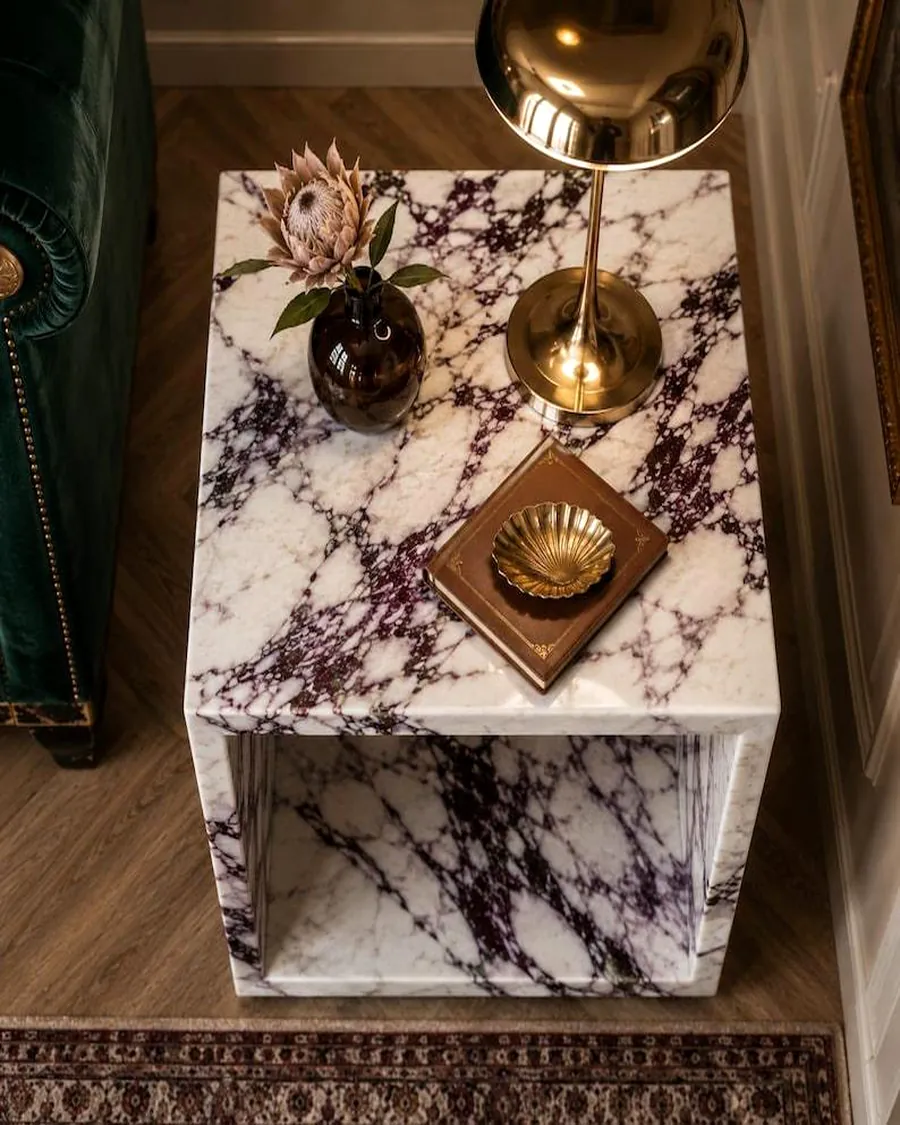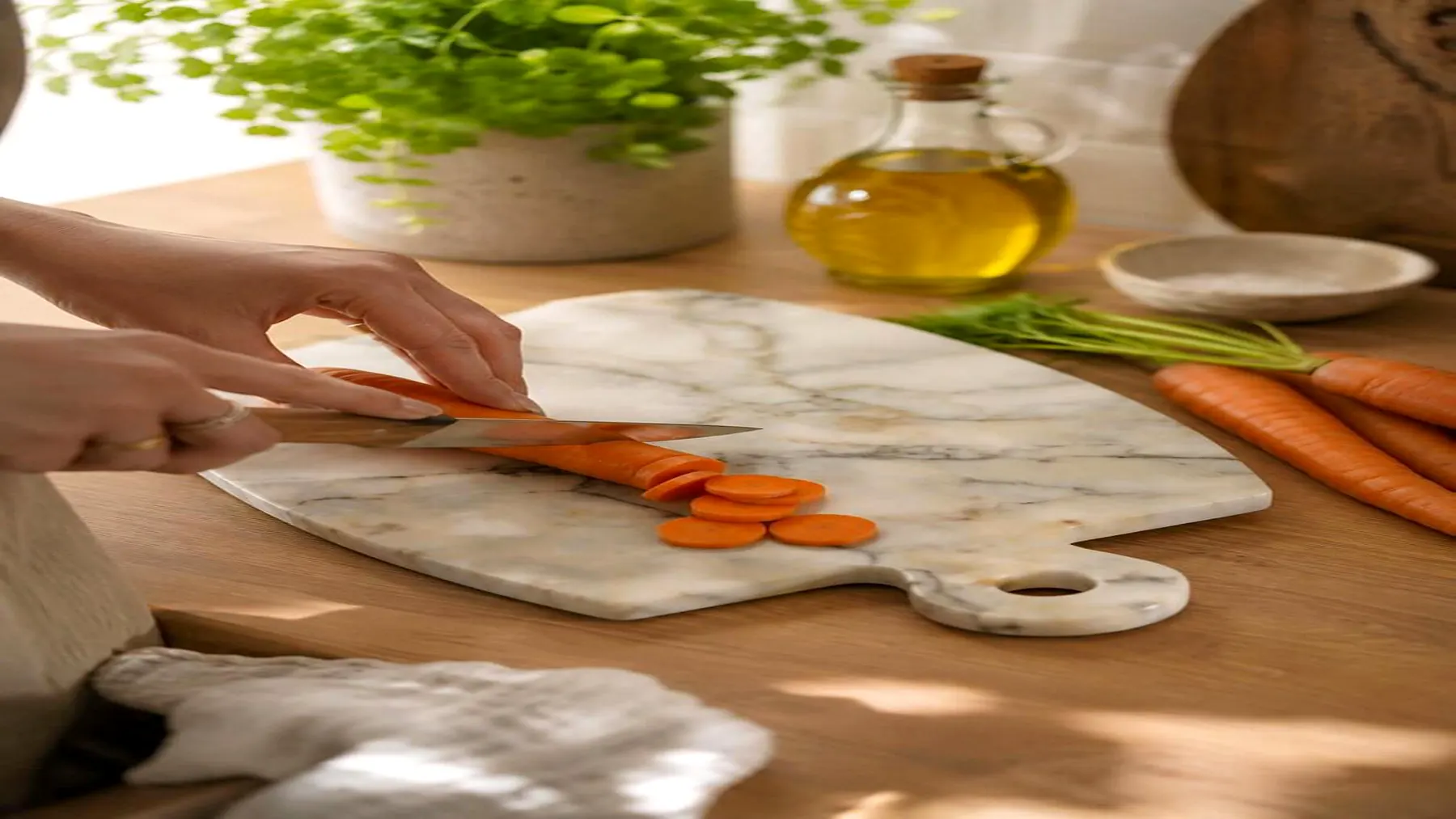
Craftsmanship
Block. Cut. Turn. Inlay. Polish.
Five stages, none of which can be hurried without showing in the finished piece.
The process
What happens between a block and a finished piece.
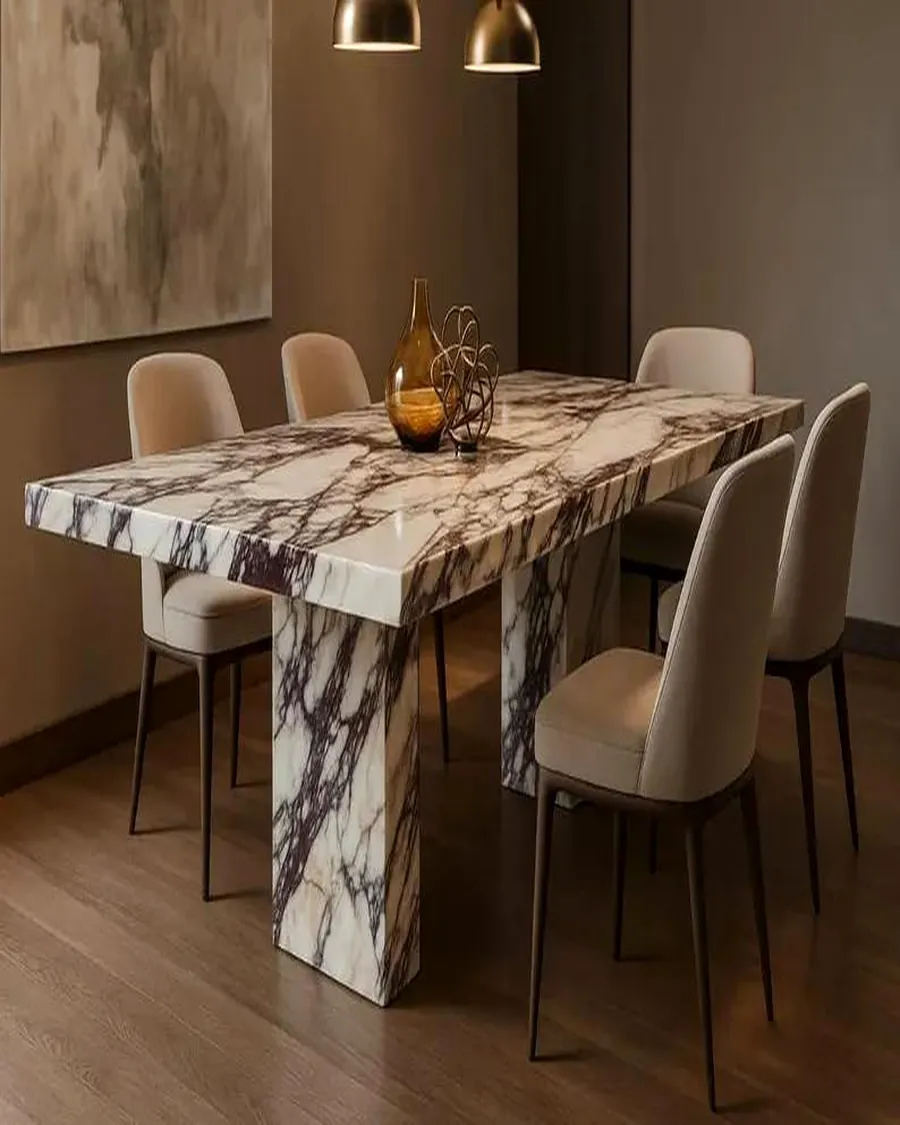
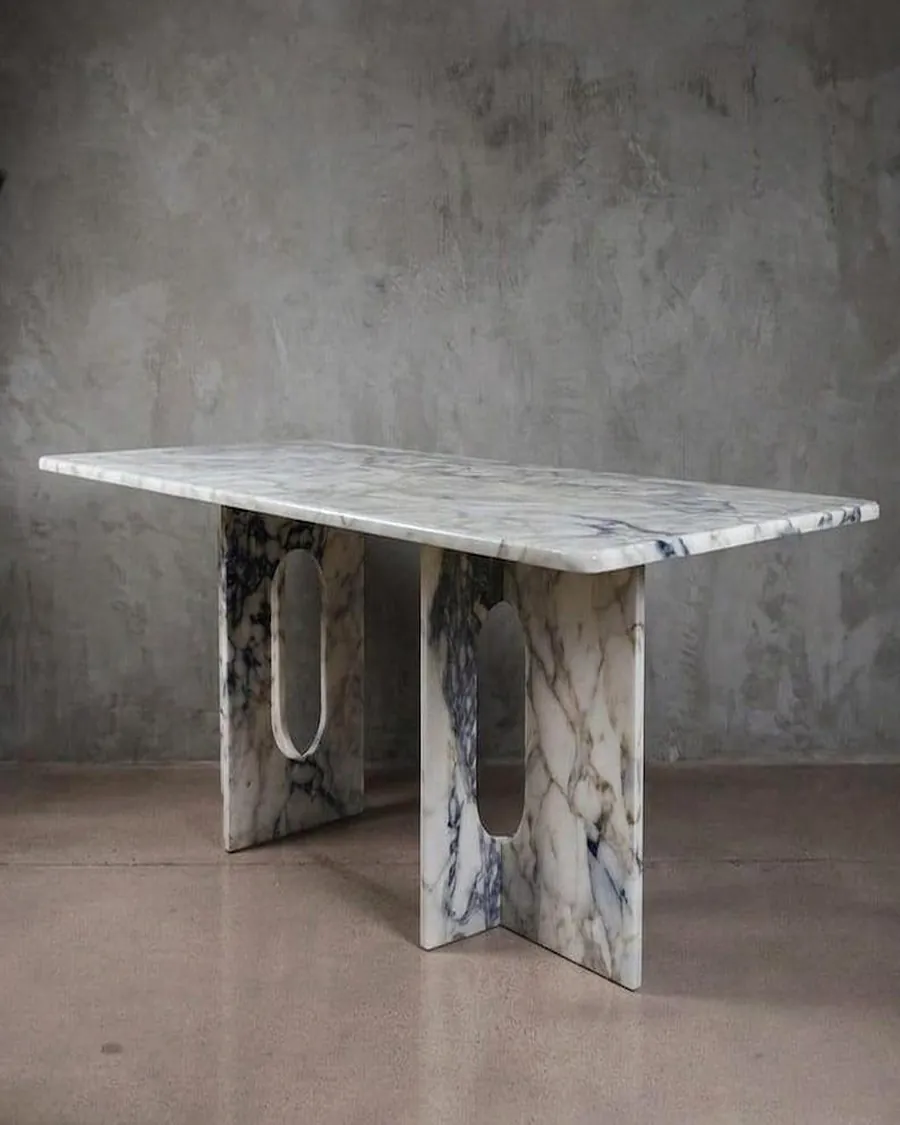
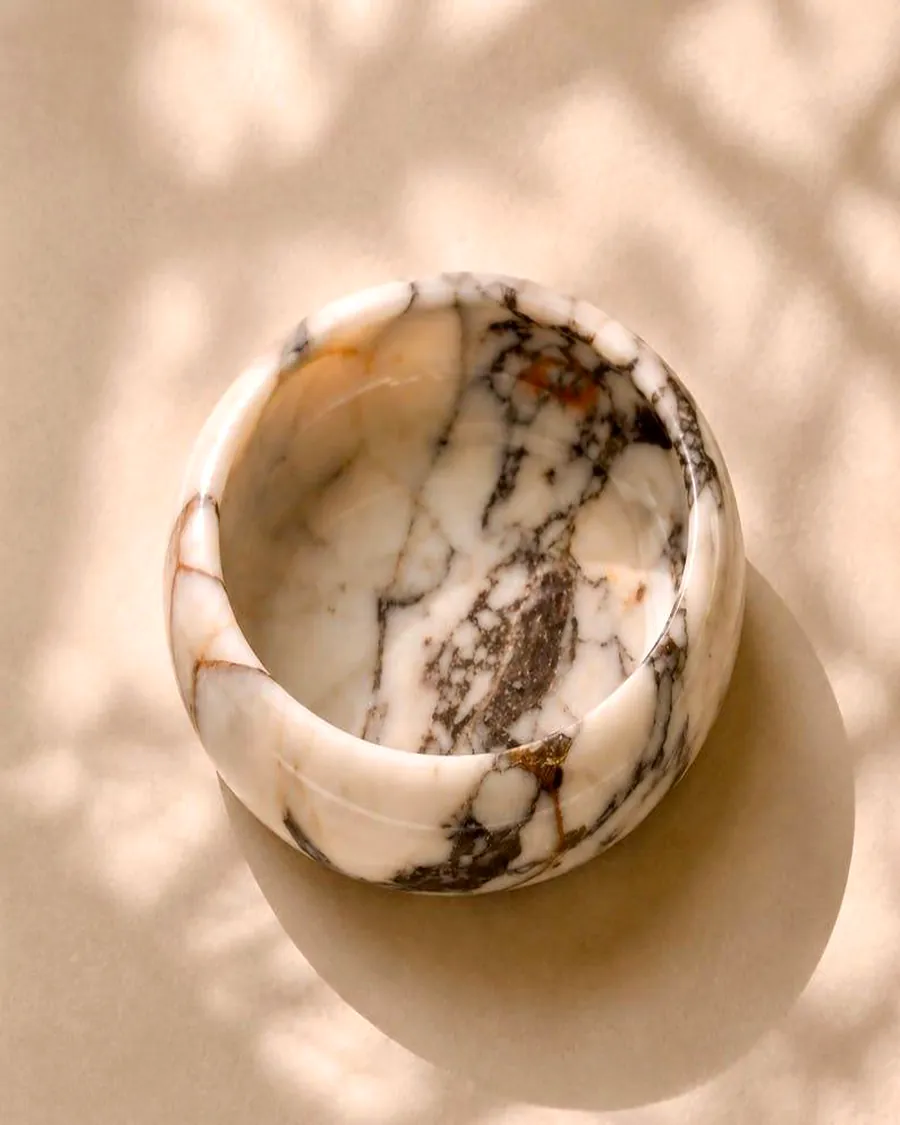
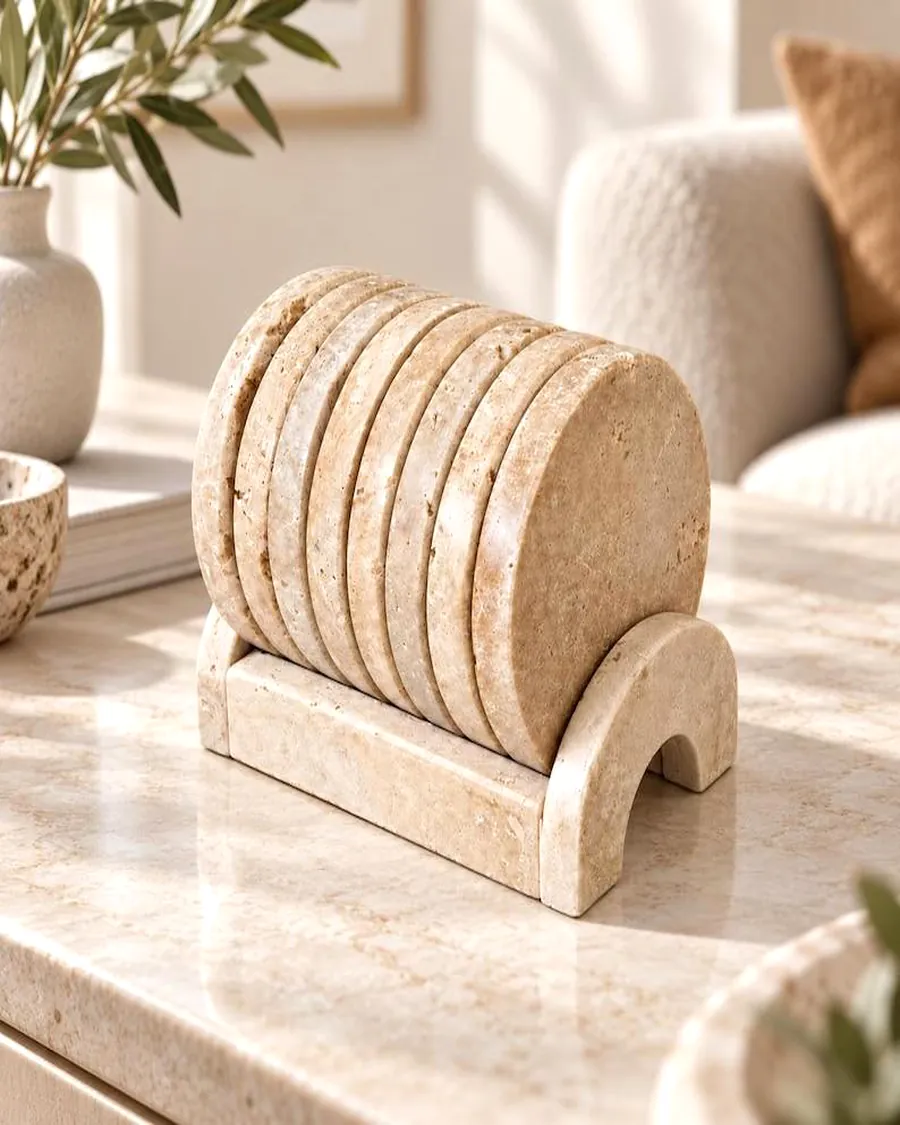
Selecting the block
Blocks are chosen by hand for vein, colour and soundness. A flawed stone is set aside before a single cut is made.
Cutting to form
The piece is cut and shaped from solid stone — no veneers, no composites, no printed surfaces.
Turning & carving
Bowls, pillars and pedestals are turned; edges, handles and arches are carved and worked by hand.
Inlay & detailing
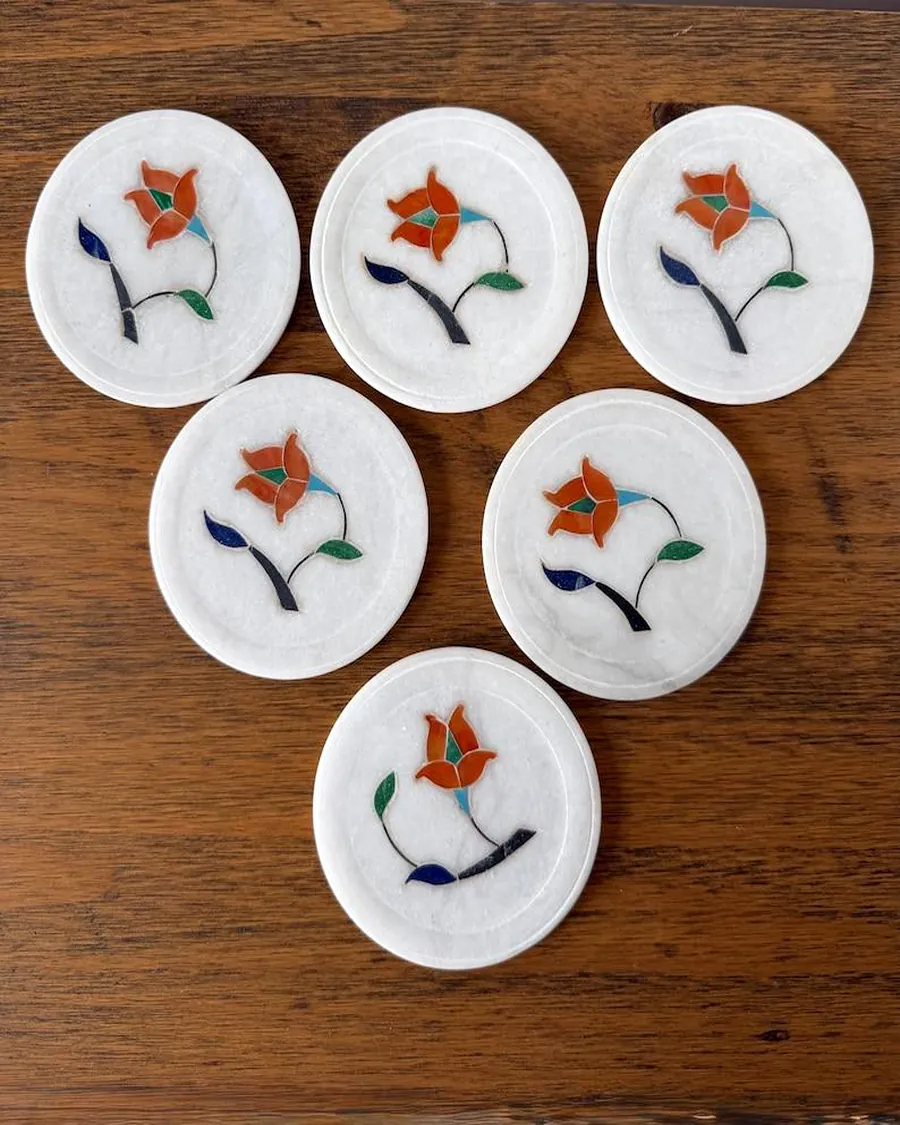
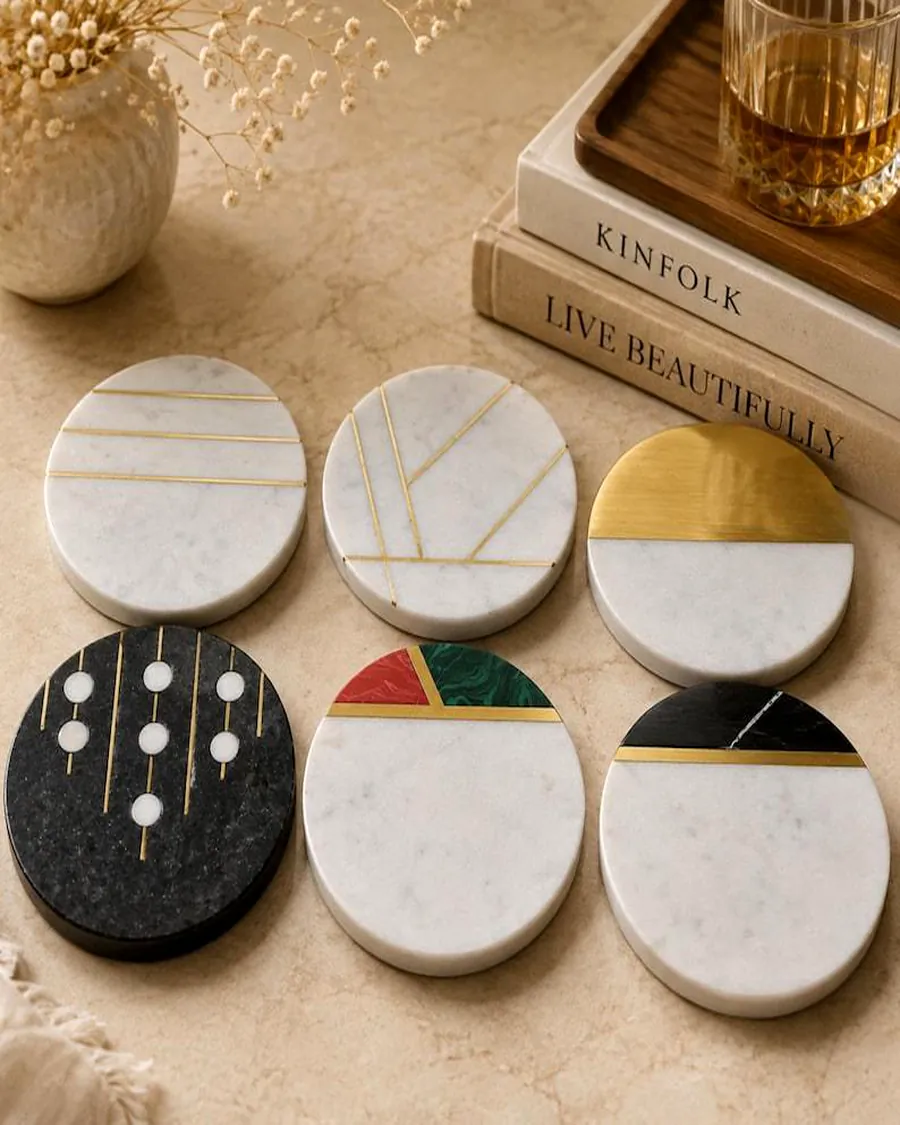
Brass, malachite, mother of pearl and coloured stone are cut to shape, seated and set flush.
Polish & inspection
Multi-stage polishing, a check against the drawing, then careful packing before the piece leaves Agra.
The stone
What we work in.
Availability follows the blocks we can source and inspect. The stone for your piece is confirmed with you before any cutting begins.
Inlay
Stone set into stone, polished flush.
Pietra dura — parchin kari here — is the technique Agra is known for: a recess chiselled to an exact outline, a piece of brass, malachite, mother of pearl or coloured stone ground to match, seated and polished until your fingertip cannot find the join.
It appears on our chess boards and coasters, and on any piece where a customer asks for it. A single coaster can hold a dozen separately cut pieces.
Care
Living with marble.
Wipe, don't soak
A soft damp cloth is enough. Dry the surface afterwards rather than leaving water to stand.
Blot spills
Wine, citrus and oil etch marble if left. Blot rather than wipe, and clean with plain water.
No acidic cleaners
Vinegar and descalers dull the polish. Mild soap and water, or a pH-neutral stone cleaner.
Expect patina
Natural stone softens with use. That is the material behaving as it should, not a fault.
Bespoke
Commission something of your own.
A size that fits your room, a stone you have chosen, a piece made only once. Tell us what you have in mind.